
When Panic Attacks Affect Daily Life
Do you find yourself constantly worrying about having another panic attack? Have you started avoiding the NYC subway, crowded places, or social plans because you’re afraid you might panic and be unable to escape easily?
This fear is completely understandable. Panic attacks are intense, terrifying experiences that can leave you feeling out of control in your own body. For many, the constant fear of having another panic attack becomes even more disruptive than the attacks themselves.
Over time, recurring attacks and anticipatory anxiety can evolve into Panic Disorder and agoraphobia, where worry and avoidance begin to interfere with work, relationships, and everyday life.
Fortunately, this condition is highly treatable. At Behavioral Health of New York (BHNY), our PhD-level psychologists provide Cognitive Behavioral Therapy (CBT), the gold-standard evidence-based therapy for panic attacks, Panic Disorder, and agoraphobia.
Learn more about our Upper East Side psychologist practice.

Understanding Panic Attacks
A panic attack is a sudden surge of intense fear or discomfort that reaches its peak within minutes. When it comes out of nowhere, the experience can be especially frightening and confusing. During a panic attack, people experience overwhelming physical sensations that feel alarming, even though the sensations themselves are not dangerous. Panic attack symptoms can strike suddenly especially in high-pressure NYC environments.
Common Panic Attack Symptoms
- Racing or pounding heart
- Shortness of breath or feeling smothered
- Chest tightness or discomfort
- Feeling of choking
- Dizziness or lightheadedness
- Sweating or trembling
- Nausea or gastrointestinal distress
- Hot or cold flashes
- Numbness or tingling sensations
- Feeling detached from oneself (depersonalization) or surroundings (derealization)
- Fear of losing control or “going crazy”
- Fear of dying
These sensations can feel medically alarming. Many people initially seek medical care due to concern about a heart attack, stroke, or other physical emergency. Even after receiving reassurance that nothing dangerous is occurring, the fear of experiencing another panic attack often remains.
Panic attacks can also occur in the context of other anxiety disorders. Learn more about our Anxiety Therapy NYC services.

How Panic Attacks Develop into Panic Disorder
Many people experience a panic attack without ever developing Panic Disorder. For others, the experience becomes the beginning of an ongoing cycle of fear and avoidance that gradually interferes with daily life.
After an initial panic attack, many people understandably become more aware of bodily sensations such as a racing heart, dizziness, or changes in breathing. Because these sensations were previously associated with panic, the brain interprets them as signs of danger rather than harmless fluctuations in the body.
Over time, the brain learns to associate these sensations with fear—a process known as classical conditioning. As the fear of another panic attack grows, people often pay close attention to their bodies for signs of another panic attack. This heightened awareness can make ordinary sensations more noticeable, increase anxiety, and perpetuate the cycle of panic and fear.

When Avoidance Takes Over
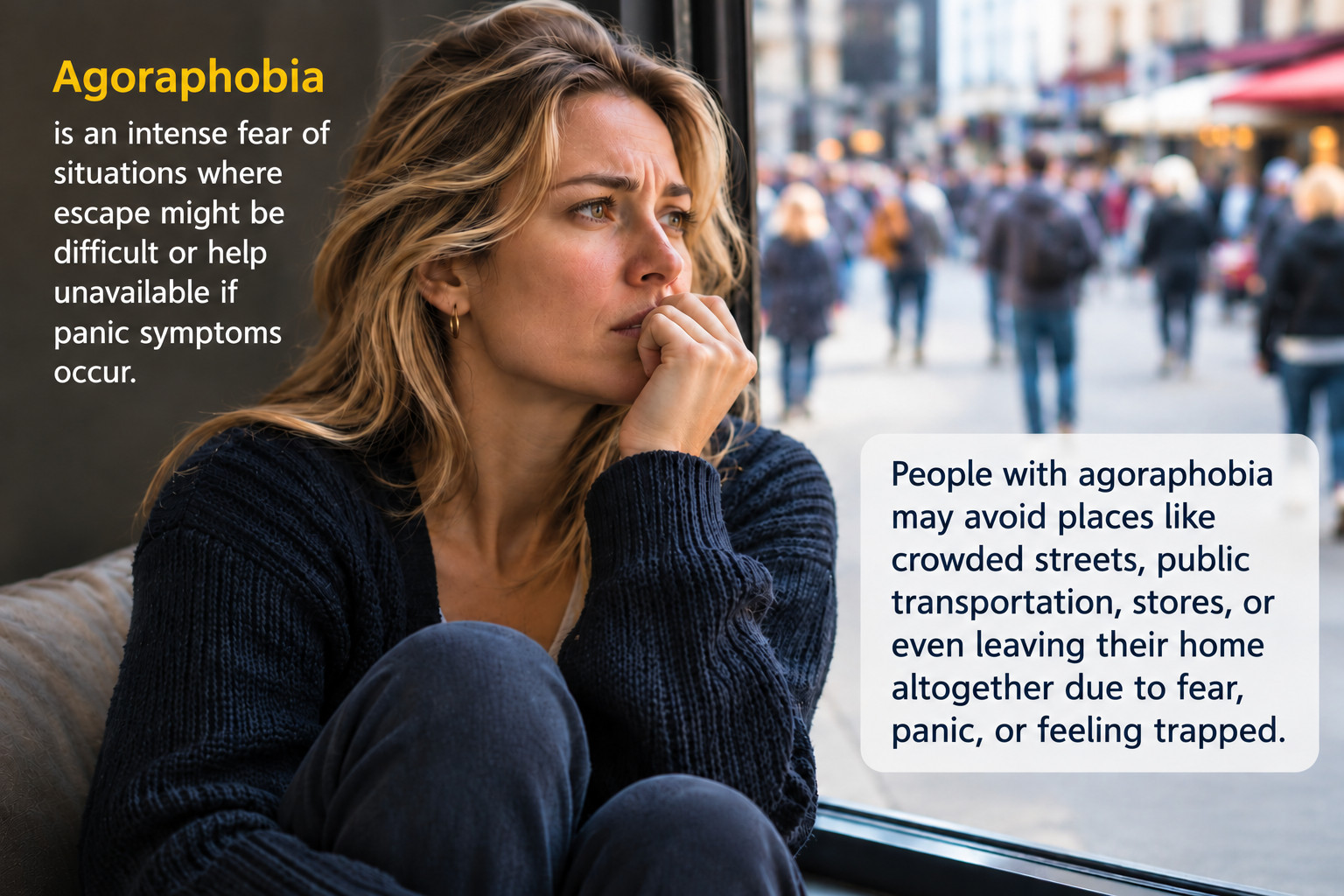
When people fear panic symptoms, they may understandably avoid situations, activities, or places associated with previous attacks. Over time, avoidance can expand and increasingly restrict work, relationships, travel, and independence. Fear and avoidance can become severe enough to develop into agoraphobia, the fear of being in places or situations where escape may feel difficult or help may not be readily available if a panic attack occurs.
Commonly avoided situations and activities are:
- Public transportation
- Subways
- Buses
- Trains
- Driving
- Traffic
- Bridges
- Tunnels
- Highways
- Crowded stores
- Shopping centers
- Restaurants
- Movie theaters
- Long lines
- Elevators
- Being far from home
- Traveling alone
- Being alone outside the home
The Cycle of Panic and Avoidance
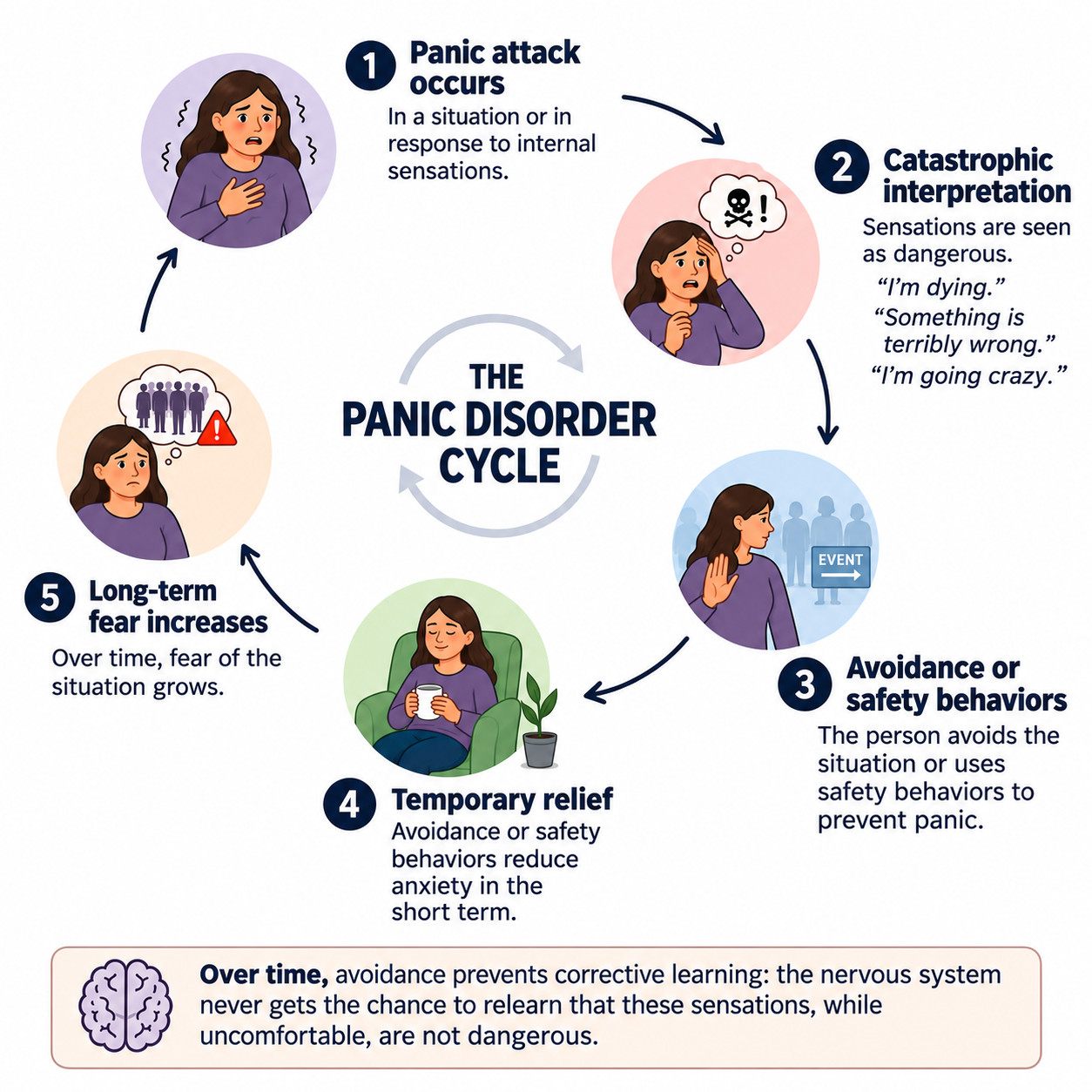
Panic disorder tends to persist through a self-reinforcing cycle. A panic attack—or even an ordinary bodily sensation like increased heart rate, dizziness, or nausea—is interpreted as dangerous. Thoughts such as "I'm having a heart attack," "I'm going to faint," or "I'm losing control" increase anxiety, making the physical sensations even stronger.
To prevent another panic attack, many people avoid certain places or rely on safety behaviors such as carrying medication, staying near exits, sitting close to bathrooms, asking loved ones for reassurance, or only going places with a trusted person.
Although these behaviors reduce anxiety in the moment, they unintentionally strengthen the fear over time. Because the feared situation is avoided, the brain never has the opportunity to learn that panic symptoms, while uncomfortable, are not actually dangerous.
How Therapy Can Help
The most effective, evidence-based treatment for panic disorder and agoraphobia is Cognitive Behavioral Therapy (CBT).
CBT helps you change both the way you interpret and respond to anxiety sensations.
Treatment may include:
- Understanding the physiology of the fight-or-flight system
- Learning how panic symptoms are misinterpreted as danger
- Reducing fear of bodily sensations
- Identifying and shifting catastrophic thinking patterns
- Building confidence in your ability to tolerate anxiety
Behavior therapy techniques are often included in treatment:
Interoceptive Exposure gradually helps you confront feared physical sensations (such as dizziness or a racing heart) so they become less frightening.
In Vivo Exposure gradually helps you face avoided situations and places without relying on avoidance or safety behaviors.
A key part of treatment with a panic attack therapist is learning to respond differently to anxiety rather than fearing it. The goal is to change your relationship with anxiety so it no longer dictates your choices or limits your life.
Over time, panic sensations become less threatening and more manageable, allowing you to regain confidence in your daily life.

Panic and Agoraphobia in New York City
Living in New York City can make panic and avoidance feel especially challenging. The pace, density, and unpredictability of the environment can amplify anxiety for many people.
Whether you're commuting through Midtown, taking the subway into Lower Manhattan, navigating crowded sidewalks, or stuck in rush-hour traffic along the Central Park transverse connecting the Upper East Side to the Upper West Side, the city's fast pace and density can intensify fears of becoming trapped or unable to escape
Many New Yorkers begin avoiding:
- Subway rides
- Buses
- Rush-hour trains
- Crowded sidewalks
- Elevators in office buildings
- Long commutes
- Tunnels and bridges
- Large shopping centers
- Restaurants
- Sporting events
- Concerts
Some people begin relying heavily on rideshares, limiting how far they travel from home, avoiding professional opportunities, or carefully planning routes based on perceived safety.

Panic Attacks on the NYC subway
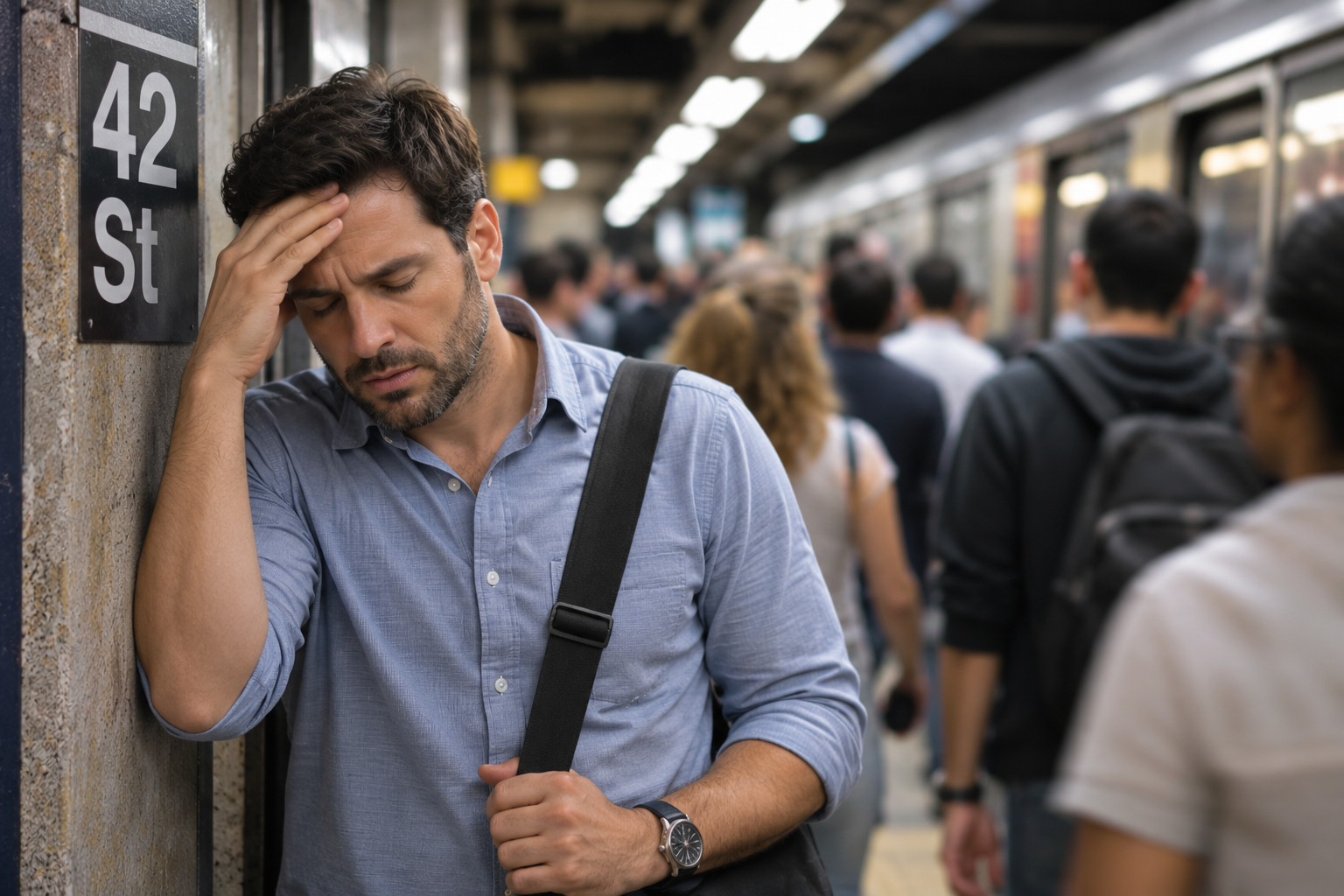
For many New Yorkers, the subway system is the ultimate trigger for panic attacks and agoraphobia. The combination of packed train cars on the 4,5,6,Q, N/R, the underground tunnels, delayed transit between stations, and the feeling of having 'no immediate escape' can cause your body's flight-or-fight response to hit overdrive.
A single panic attack on the subway can cause people to start avoiding specific train lines, relying on expensive rideshares, or dreading their morning commute altogether. Over time, especially with multiple panic attacks, people may develop agoraphobia and avoid traveling entirely.
Therapy can help you gradually rebuild confidence navigating New York City so that daily life feels more flexible, manageable, and enjoyable again.
Panic Disorder Therapy in NYC
At Behavioral Health of New York, we provide evidence-based treatment for panic disorder, panic attacks, agoraphobia, and related anxiety disorders using Cognitive Behavioral Therapy (CBT) including interoceptive exposure and in vivo exposure.
Whether you've experienced your first panic attack recently or have struggled with panic for years, therapy can help you understand your symptoms, reduce avoidance, and regain confidence navigating everyday life throughout New York City.

Schedule a Consultation
If you're looking for panic disorder therapy in NYC or would like to learn more about whether CBT is right for you, we'd be happy to speak with you. During a consultation, we can discuss your symptoms, answer your questions, and determine whether treatment is a good fit.
Our panic attack therapists are doctoral-level psychologists. Our office is located on the Upper East Side and we can offer teletherapy throughout New York State.
Taking the first step can feel intimidating, but it is often the beginning of meaningful and lasting change.

Frequently Asked Questions
Will I always have panic attacks?
No. Most people experience substantial improvement with evidence-based CBT. Even when anxiety occurs, it typically becomes much less frightening and easier to manage.