
What Is Virtual Reality Therapy?
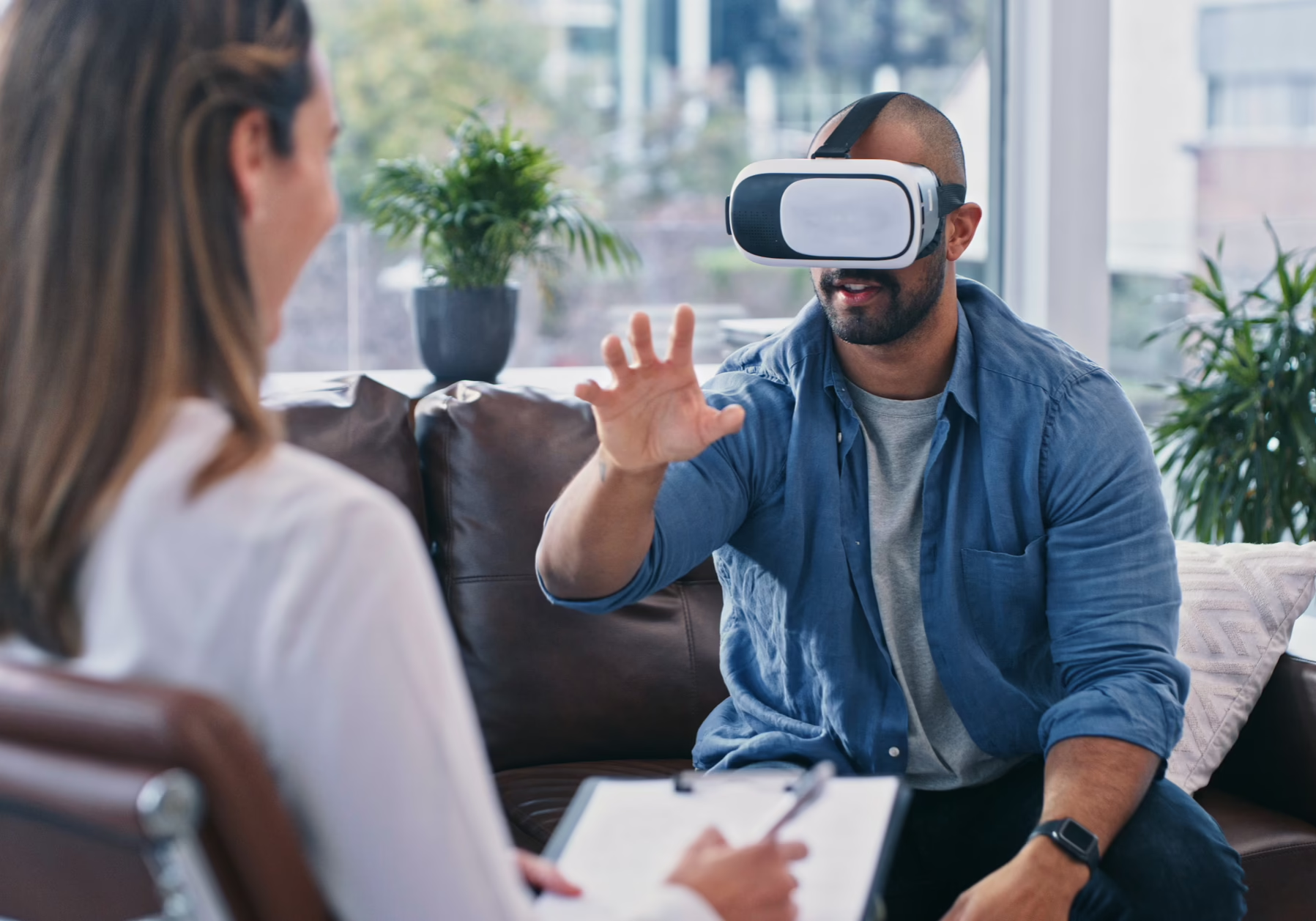
Virtual Reality Therapy is a treatment mode that uses VR technology to help people overcome many anxiety-related conditions. During sessions, clients wear virtual reality headsets to recreate the sights, sounds, and imagery of their feared stimulus. (A barking dog, public speaking podium, army battlefield, etc.) Through immersion into computer generated worlds that trigger feared responses, therapists can safely guide clients toward their goals of distress tolerance and desensitization. VR Therapy has been deemed effective for phobias, panic attacks, social anxiety, PTSD, and OCD.
How Does VR Therapy Work?
A hi-tech form of Exposure Therapy, VR Therapy simulates life-like 3D worlds which recreate a client’s most feared situations. By leveraging VR technology – therapists can also use biofeedback tools like heart rates, eye movements, and skin sensors to steadily increase exposure intensities. Then, through repeated virtual-world exposures, patients can be better prepared to face their real-world challenges.
Which Conditions Does VRT Treat?
Phobias
Do you have a fear of flying? VR Therapy can simulate the sights, sounds, and sensations of taking off on a 747. Scared of heights? VR Therapy can place you on virtual rooftops looking down at the street. Does public speaking leave you cowering? This technology can put you on a podium in front of a large audience. Virtual Reality Therapy can help with many types of phobias, recreating life-like settings that allow you to confront your fears in a gradual, safe, controlled way.
PTSD
Virtual Reality Therapy is especially equipped to help those suffering from PTSD. How? VR goggles and headsets are designed to bring clients face-to-face with past traumatic events such as military combat, auto accidents, violent assaults, and others. Under the guided supervision of a therapist, and with gradual repeated exposures, PTSD symptoms often subside over time.
Social Anxiety
Are you scared of talking to people at parties? Do you fear being judged by your friends? What if your work colleagues asked you to join them for lunch, would that have you panicked? If you suffer Social Anxiety, VRT can be a great way to reduce your fears of these social situations. By placing you in different social scenarios through hyper reality, you can learn to interact in healthier ways.
OCD
Those who battle OCD often have contamination fears - causing them to avoid touching, grabbing, or handling certain objects. It might be doorknobs, toilet seats, dirty socks, or raw foods. VR Therapy can help OCD patients confront their fears by offering a simulated engagement with these objects. Compulsive behaviors that often follow, like excessive hand-washing, are then encouraged to be avoided.
Panic Attacks
Do sudden, overwhelming surges of intense fear strike you without warning? For those who suffer from panic attacks, everyday situations like riding in enclosed elevators, navigating busy grocery stores, or driving on highways can become terrifying triggers. Virtual Reality Therapy can help by safely recreating these specific environments. By experiencing these simulated settings under the guided supervision of a therapist, you can practice vital coping and grounding techniques, learn to ride out the physical symptoms of panic, and gradually retrain your brain to feel safe in the real world.
VRT Is Tech-Enabled Exposure Therapy
Virtual Reality Therapy is considered a hi-tech form of Exposure Therapy. With its computer-generated interface, VRT can provide some advantages over traditional ERP. Here’s how VRT compares to standard Exposure Therapy.
Imaginal Exposures
When patients are asked to use their imaginations to simulate anxiety provoking situations, there can be limits to what the human brain conjures-up with classic ERP. No such issue with VRT. Instead, the VR experience and all its visual stimulus helps spark people’s imaginations.
In-vivo Exposures
Nothing can replace real-life settings for helping patients be exposed to what they fear most, and that’s how ERP applies in-vivo. But taking patients into the real world isn’t always practical, can be cost prohibitive, and sometimes even poses risks. Through 3-D immersion, VRT provides a “real-life” experience while taking place in the convenience, practicality, and safety of your therapist’s office.
Common Techniques
VR therapy can simulate dozens of real-life settings to help people conquer their fears, worries, and anxieties. Here’s a sampling of the 3-D worlds VRT can recreate:
- Elevators
- Airplanes
- Highways + Bridges
- Medical Exam Rooms
- Social Gatherings
- Corporate Boardrooms
- Building Rooftops
- Barking Dogs
- Spiders + Insects
- Army Battlefields
- Public Speaking Podiums
- Sports Playing Fields
Benefits of VR Therapy
To help overcome your anxiety, fears, and other related issues or conditions, VR Therapy offers many treatment benefits:
Distress Tolerance:
Getting accustomed to feeling afraid is a key benefit of VR Therapy, and a key way you can start reducing your anxiety levels.
Conditioned Learning:
By undergoing repeated exposures in a VR world, you can apply those healthier learned responses to the real world.
Desensitization:
Becoming desensitized to your feared stimulus is one of the main VR Therapy benefits and lies at the heart of its treatment.
Anxiety Reduction:
The overall goal, and net effect of VR Therapy, is to have clients walk away from treatment less anxious and more confident than before.
Life Progress:
By conquering their worst fears, clients can then be more free to move forward with their lives.
Virtual Realty Therapy at Behavioral Health of NY
1. Contact Our Office
The first step in beginning Virtual Reality Therapy is to contact Behavioral Health of New York.
2. Speak with Dr. Levy
Dr. Levy meets with all new clients to determine which doctor is best for their personal situation and goals.
3. Fill Out Forms
Fill out the necessary forms so that we have all the information we need to get you started with VR Therapy.
4. Start Your Sessions
Behavioral Health of New York will set up sessions at times that are most convenient to your schedule.

Live Free with Virtual Reality Therapy
Get started with a consultation for VR Therapy at Behavioral Health of New York